
Beijing Dispatch #17 – Shot in the Arm: COVID-19 Vaccines in China and the Prospect of Travel
Beijing Dispatch #17 – Shot in the Arm: COVID-19 Vaccines in China and the Prospect of Travel
 Large-scale public events, free domestic travel, gyms, restaurants and everything in between are wide open for business… residents of the Middle Kingdom have been enjoying life with a near-absence of COVID-19 these last several months. Yet despite the comparative advantage in lifestyle, many are looking to the future possibility of travel, spurred by various recent pandemic-related headlines. From the initialization of a vaccine passport program, foreign nationals being given access to inoculations, purportedly mandatory anal-swab testing for international arrivals, and inklings of a non-Chinese vaccine being approved for domestic use in the near future, the rumour mill is churning. Yes, there is a lot to unpack here, and I’ll attempt to do so, but only with a bold, double-underlined disclaimer: I have been trying to finalize this vaccine-related blog post for a month, and it seems that every time I think the situation has stabilized, something new crops up. Please double check relevant resources before referring to Beijing Dispatch as your preferred travel advisory companion.
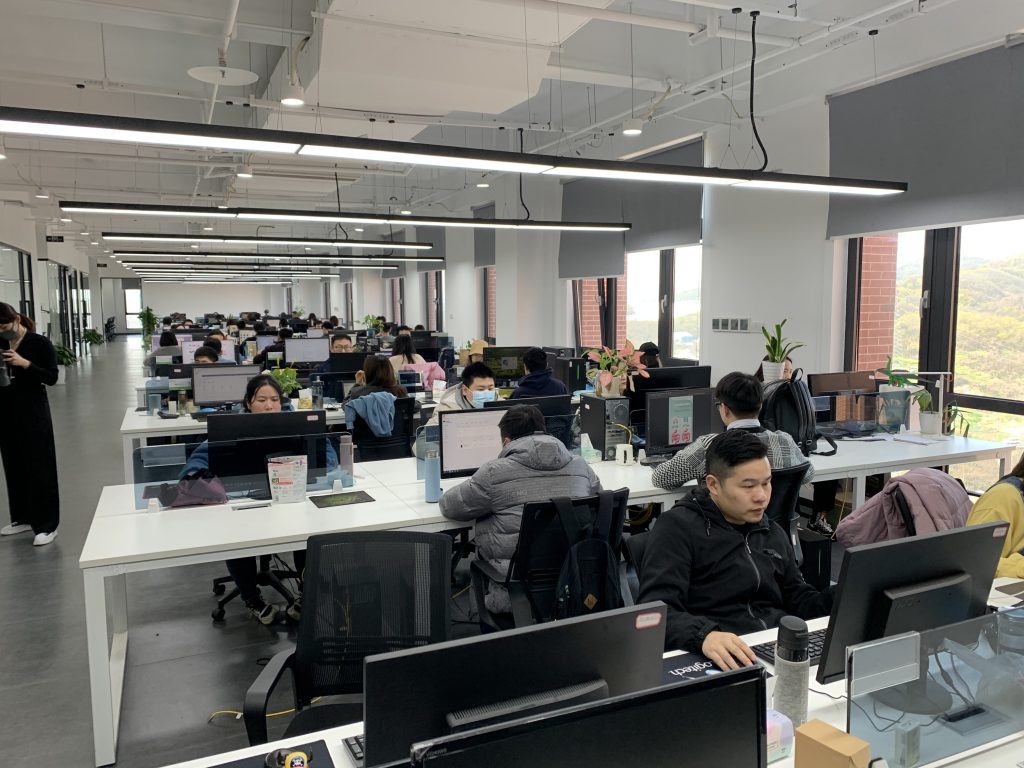
Office life generally back to normal – Noah Fraser, Nanjing – March 2021
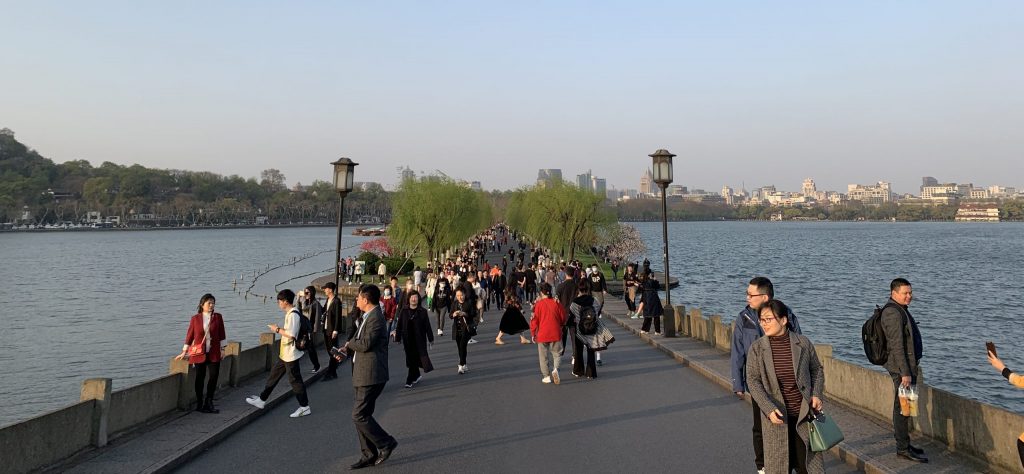
Mask-free tourists flock to the West Lake – Noah Fraser, Hangzhou – March 2021
Firstly, regarding international travel – from the reading of highly-fluid policy announcements as well as conversations with our nationals on the ground here, my continued sense is that the pursuit of entering (or re-entering) China for Canadians at this time is an extremely onerous undertaking and should be attempted with a high degree of uncertainty. Many readers are aware the Chinese Embassy in Ottawa recently suspended entry of foreign nationals into China from Canada (a surprise announcement that had recently been applied to the United Kingdom as well), which has effectively brought us back to the “PU letter” era of the second half of 2020. What this essentially means is that, once again, a valid residence permit alone is not enough to re-enter the Mainland, and special visas are required through a new application which includes a special entry invitation letter. Assuming your employer or organization in China can assist in issuing this document for a new S-1 visa, inbound travellers are now subject to anal-swab testing on arrival and anywhere between two and four weeks of quarantine, depending on your final destination. In Beijing, for example, the policy at the time of this writing is “2+1+1”: two weeks at a quarantine hotel at your cost, one week of quarantine at your residence in Beijing, and one additional week of quasi-quarantine, where you are not supposed to enter establishments or areas that could have 20 people or more inside. This last week is a bit fuzzy on the details, but with mandatory contact tracing scan points at every entrance of public spaces including parks, malls and restaurants, most are erring on the side of caution and not going out for much more than some fresh air. All told, it does not bode well for those hoping to easily get back into the country any time soon.
For those already inside the borders of China, the seismic update from the ground here is that foreign nationals are now being invited to receive the Chinese-made COVID-19 vaccine. Businesses and residents across the country were generally contacted over the last two weeks through their landlords with requests for information on foreigners seeking to get their vaccinations. The vaccine rollout has been underway for some time now, though only recently did the shot become available to the foreign population of the country — with a few unique exceptions who managed to get their hands on it early. The vaccine is the watercooler discussion topic du jour these days among expats, with some extremely keen to get it, some against it entirely, and most falling somewhere in between. The majority of Canucks I’ve discussed this with (myself included, FYI) are planning to get the Chinese vaccine in the not-so-distant future, and with it, a healthy amount of hope pinned to a yet-undetermined quarantine time reduction down the road. However, the major impetus for getting the jab today is not the threat of contracting COVID (there are virtually no cases to speak of in China, and it has been 67 days since the last local transmission in Beijing), but that if you decide to get a Chinese vaccine, you will not require the aforementioned PU letter if you have a valid residence permit and want to return to China after leaving. Those trying to enter China on a business visa will still have to go through the challenging and somewhat unpredictable S-1 visa application with a PU letter – a process for which I have heard experiences that span a broad spectrum over the past several months, and only middling success. There are also those attempting to leave Canada for a country that has approved the Chinese shot, get vaccinated there, and then travel to Shanghai, Beijing, et al – a route that I do not recommend as there are unclear rules surrounding residency status in the country where one gets vaccinated, and you may still not be admitted back into China. All told, the practicality is mainly limited to those who are based here and are planning some international travel – though quarantine is still required upon return.
With all that 麻烦 (trouble) in mind (and again, this is only my own thinking, not an endorsement), I am likely going to get the Chinese vaccine here as an insurance policy in case there is a need for emergency travel back to Canada. The three-week waiting period between the first and second dose is the key driver – if one had to get home quickly, one would not have time to get the second treatment pre-departure and would then not have the full “vaccine passport” appear in their Health Kit app, nor a certificate of inoculation, which would allow them to avoid the challenge of applying for a special visa for re-entry. Regardless, while it is still very early days in terms of implementation, I believe making the vaccine available to foreign nationals was a necessary step in the right direction, and that Canadians living and working in China will have more freedom of movement over the coming months with it than without it – fingers firmly crossed for a Hong Kong/Macau/Mainland travel bubble being established before long.
While Chinese nationals have had access to the vaccine for months and supplies are plentiful, it would seem that with the pandemic effectively a non-issue, the public is generally unmotivated to get the shot. With vaccinations still at a relatively low rate, China potentially runs the risk of falling behind the global ramp-up – though I’d assert that is not the top concern in Zhongnanhai. A South China Morning Post article dated April 6, 2021, quoted the head of Shanghai’s COVID clinical team as saying that international travel for Chinese might be “possible next spring.” At over a year away, that may seem far at first glance, but with the 100th anniversary of the founding of the Chinese Communist Party being celebrated this summer and the Beijing Winter Olympics a few months later, I personally see no incentive for major changes to the current border policies between now and then at the risk of an outbreak. One potential outlier is the rumoured possibility of a non-Chinese vaccine being approved for the market – though perhaps a longshot’s longshot considering the geopolitical scene these last several weeks, and less likely to carry with it any special travel advantages. Best not to pontificate. Regardless, alongside the other Chambers and Business Councils in China, we are regularly advocating for clarity on the urgent topics of vaccine diplomacy and consistency in cross-border travel policy.

Intensive coverage of the Two Sessions – Noah Fraser, Beijing – March 2021
It seems like yesterday that I was writing about the 2020 “Two Sessions” being delayed a month due to the COVID-19 outbreak in China. Somehow, it’s already been a year, and the massive annual government meetings have wrapped up for 2021, this time with the release of the much-anticipated 14th Five-Year Plan. A colossal document that precedes dozens more plans from provinces, cities and even SOEs, this is a critical piece of policy for Canadian companies doing business with China. Look for a teaser of our special FYP report coming out next week, produced in partnership with Trivium China, and the first episode of a three-part FYP podcast with the support of Neo Performance Materials, now available on Apple Podcasts and Spotify. With much of Canada continuing to experience flare-ups and lockdowns, please continue to reach out to us in China at noah@ccbc.com to work with you on any assistance we can offer during these travel-restricted times.